71. Dorset Gardens Brochure: Questions to Ask About Project Details
Seeing a new condo project move from “coming soon” to something you can touch, read, and compare is exciting. It is also where buyers most often lose time or get misled, because brochures tend to highlight what looks good under good lighting, while the practical decisions live in the fine print and in the answers sales teams give when you ask the right questions.
If you are looking at Dorset Gardens, a marketing name linked to an upcoming condominium on Dorset Road in Singapore’s District 8, near Farrer Park MRT, your Dorset Gardens brochure can be a helpful starting point. But the smarter move is to treat the brochure as a document that needs to be interrogated, not a final statement.
Below is a practical set of questions you can bring to your next viewing or book appointment. I’ll also share what to look for, how to sanity check claims against what is known publicly, and where buyers should be cautious because confirmed details like pricing often come in stages.
Start with what you can verify, then ask what you cannot yet confirm
From the information that is publicly available, Dorset Gardens appears to be tied to the Dorset Road GLS site, associated with a UOL-led consortium. One widely reported detail is that the bid was awarded in October 2025 for S$524.3 million, at about S$1,338 psf ppr. The consortium is described as UOL, Singapore Land Group (SingLand), and Kheng Leong Company, with one source stating JV shares as UOL 60%, SingLand 20%, Kheng Leong 20%.
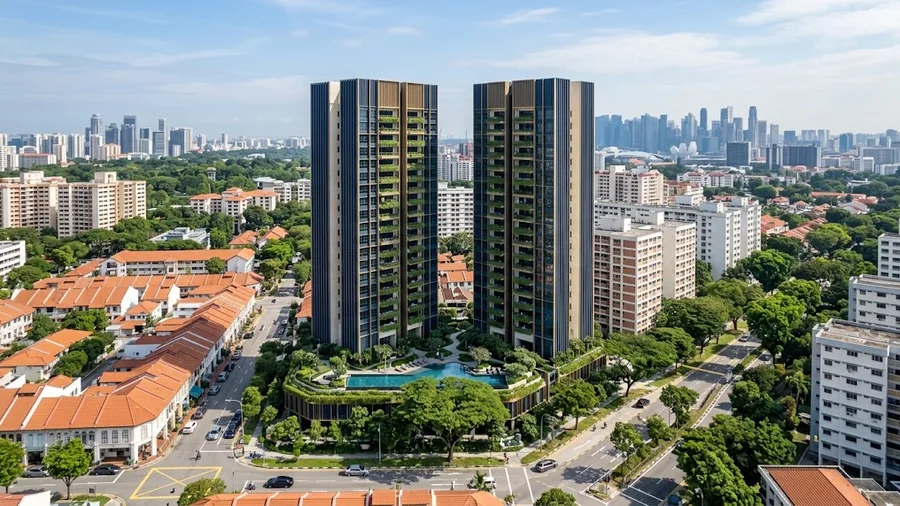
Another project descriptor that shows up in marketing material: the development is planned as 99-year leasehold, with about 428 homes across two 27-storey towers. There is also mention of the site being roughly 10,399 sq m, positioned near Farrer Park MRT and close to schools such as St Joseph’s Institution.
Those facts matter because they set the boundaries of what the brochure should eventually align with. If the brochure is already using the “right numbers” early, that is a good sign. If it quietly changes unit counts, tower configuration, lease terms, or the exact site premise later, that is not ideal, because it affects everything from crowding and lift usage to resale appeal.
So as you flip through the Dorset Gardens brochure, your mindset should be: verify the anchors first, then probe the parts that determine your day-to-day experience and your purchase economics.
The brochure can be persuasive, so ask about what it does not show clearly
A brochure typically includes a mix of unit layouts, concept imagery, a few “lifestyle” pages, and an impressive set of sales language. What it may not show, at least not upfront, are the details that decide whether you enjoy living there, whether your unit is functional, and whether Dorset Gardens the project delivers on what it promises.
For Dorset Gardens, the public descriptors are limited to broad project planning information. That means you must ask for answers that are usually not “decorative” but operational.
When you are at the point of Dorset Gardens view showflat planning, your job is to convert brochure claims into specifics you can evaluate.
Here are the most useful question themes to bring into that conversation.
Ask these questions about the development’s core structure and planning logic
Before you get into finishes and “vibes,” confirm the structural facts and the planning consequences.
In a two-tower, roughly 428-home scenario, your unit experience can vary significantly depending on where your stack sits, how corridors and lift lobbies are arranged, and how the towers relate to the sun and surrounding roads. Even if the brochure has pretty renderings, those operational details may still be in progress during launch.
So you want answers that tie together:
- lease tenure, because it affects financing and long-term resale comparisons
- the approximate number of units per floor and how it changes by tower
- tower positioning, because it affects views and light
- site planning around amenities, because it changes noise and privacy
If the brochure only gives you a final-sounding story, ask for what is already confirmed versus what is still “subject to approvals” or “subject to final design.”
That distinction sounds boring, but it is the difference between an informed purchase and a hopeful one.
Confirm the brochure’s unit numbers and layout claims with specifics
Many buyers focus on the apartment category names first, then realize later they misunderstood the actual layout. With a new launch, unit sizes and layouts are often presented in a way that looks simple, but the nuance matters: door swings, corridor width, kitchen venting assumptions, and whether the “study” is truly a usable room.
If your brochure includes floor plan sketches, do not stop at “this looks nice.” Ask questions that translate sketches into daily living.
You can ask for:
- the exact unit mix by bedroom count, and whether it is the same across both towers
- floor-by-floor distribution (at least the general pattern), not just an overall project average
- the orientation and whether the brochure’s view examples reflect typical stacks or special angles
If you care about Dorset Gardens pricing, unit-specific numbers matter too. Some developers release indicative pricing bands early, but the exact price can depend on stack, floor level, and how the project positions your view relative to surrounding buildings and roads.
If the brochure is pushing a “direct developer price” narrative, confirm what that means in practice. Is it a published schedule, a promotional package, or an offer that only applies to certain unit groups?
Ask about views and privacy, but do it like a realist
“View” is one of the most overused words in property marketing. It can mean anything from “directional brightness” to “a skyline view” to “you will not look directly into another unit.”
For a project near Farrer Park MRT and along an urban corridor, your view and noise experience will be shaped by more than just the rendering angle. Even in the absence of exact confirmed information, the brochure can still set expectations.
So ask directly:
- Which direction are your best “view showflat” examples taken from, and are they representative of the stacks you are considering?
- How far are the towers from each other, and will there be direct sightlines between opposite blocks?
- What is the expected impact of nearby roads during peak hours?
If they cannot answer for specific stacks, ask whether there will be a stack-by-stack view matrix closer to launch. This is also where the phrase “subject to approvals” becomes real in your life, because setbacks and external screening can affect whether a “green view” is actually green or merely a painted concept.
Verify the developer and consortium involvement, then ask why it matters to you
The project being tied to a UOL-led consortium is not just a branding detail. It should influence the project management maturity, how quickly documentation is produced, and the quality of after-sales processes.
From the verified context, the consortium is described as UOL, SingLand, and Kheng Leong, with a stated share split at 60/20/20 in one account.
But you do not buy a spreadsheet. You buy an apartment, and you live with defects, delays, and service responsiveness.
So use the “developer” topic to ask for operational evidence:
- who handles the sale and what the customer service workflow looks like once you sign
- how maintenance is organized, especially in a two-tower project with shared facilities
- what the brochure says about timelines and when you can expect key milestones
You can also ask whether the team you are speaking to is the same group that will manage handover documentation and rectification. This is one of those questions that feels uncomfortable until you need it.
Be careful with “launch preview” pricing language, and ask how numbers are actually set
Pricing is usually the biggest driver of decisions, and it is also where marketing pages can blur the line between “indicative” and “confirmed.”
In the verified context, there is no reliable official developer brochure or fully confirmed pricing schedule shown. What exists are marketing references to things like price list registration and direct-developer-price language, but the details are not confirmed in what has been verified here.
So if the Dorset Gardens pricing section in the brochure looks confident, you should still ask:
- Is there a published price list, and is it stack-specific or unit-category only?
- Are the prices shown already reflecting the final approved layout and set-back details?
- Are there rebates, packages, or promotional credits that only apply under certain payment timing?
- What is the timeline for when the developer will release the final pricing and official sales terms?
A buyer who asks these questions early does two things: first, they avoid booking with assumptions. Second, they learn whether the project team can provide real documentation under your requested conditions.
If they dodge, that is information.
Questions about leasehold terms and what they mean over time
The brochure should mention that the development is 99-year leasehold. Even if you are not a long-horizon investor, the lease term affects a few practical decisions:
- resale comparison points with nearby condos
- how lenders view the remaining tenure at purchase time
- your own comfort with long-term holding versus selling earlier
Ask the developer team to confirm the lease tenure in writing, and ask how they expect the lease to be reflected in the eventual contract details. You are not asking because you doubt the project planning. You are asking because the contract is what matters.
This is one area where buyers often feel they already “know” the answer because the brochure says 99 years. The better question is whether every later document you will sign matches what was marketed.
Ask about unit-specific details that can change satisfaction: finishes, layout, and practicalities
When you are evaluating a new condo, the best value tends to sit in the less glamorous aspects. People remember lobby renderings, but they live with plumbing positioning, storage practicality, and the way rooms work.
Even without inventing specifics, you can ask for the brochure’s promise to be translated into contract-level detail.
Your best questions are those that force clarity:
- What are the exact inclusions in the standard package, and what is excluded?
- Are there options for upgrades, and do they affect overall timeline?
- How are air-conditioning ledges handled in your chosen unit type?
- What is the policy for changes after booking, and what are the cut-off dates?
Notice how these questions are not “what looks good.” They are “how do I avoid surprises.”
Make view showflat appointments about evidence, not persuasion
When you book a Dorset Gardens book appointment, the salesperson will likely show you the strengths. Your job is to use the visit to confirm the weaker points.
A showflat visit can be useful even when the development is still early. But it is only useful if you treat it as a technical inspection with taste.
Ask to see the unit type you are actually considering, on a layout that matches your target stack category. Do not let the visit become a tour of the most expensive “best case” unit if you are deciding on a different stack.
And if you are comparing stacks, bring a simple comparison approach in your head:
- orientation and whether windows feel shaded or open
- privacy between neighboring units
- kitchen and living flow, whether it feels cramped at real furniture scale
- how the master room feels, especially if your life is bedroom-heavy
If the team cannot support those comparisons, you lose more than time. You lose decision quality.
Where buyers get tripped up: brochures that sound certain but leave key gaps
Here are the kinds of brochure statements that can cause trouble if you do not ask follow-ups. This is not about accusing anyone, it is about how marketing materials are written.
- Unit sizes shown as approximate with no clear breakdown of what changes
- “Best views” examples that are not linked to the stacks you can book
- Pricing shown as a general range without confirming stack and floor level impacts
- Timeline language that mixes approved targets with future conditions
- Amenity renderings without clarity on operational rules and noise considerations
The fix is not to demand perfection. The fix is to ask for documentation and for stack-specific reasoning where it affects your choice.
If you can get a clear answer for each item you care about, that is a strong signal. If you cannot, you simply adjust your risk tolerance and your shortlist.
A short, practical question checklist to bring to the Dorset Gardens brochure reading
You want a tight list you can actually use during a brochure session, without turning the conversation into an interrogation. Here is a concise set of questions you can bring with you, then expand into details based on the answers you receive.
- “Can you confirm the 99-year leasehold term and how it appears in the eventual contract details?”
- “For the unit type I want, can you explain the typical stack distribution and orientation differences between the two towers?”
- “What is the exact basis for any pricing shown, and is there a stack-specific price list or only indicative bands?”
- “Which showflat units represent the stacks that match my target, and do you have any view comparison material by stack?”
- “What is confirmed now versus subject to approvals, especially for setbacks, privacy screening, and any layout details that affect my unit?”
That last question is a quiet power move. It forces the sales team to separate “marketing certainty” from “project reality.”
How to judge the brochure quality even if details are incomplete
Sometimes the brochure is strong visually but light on documentation. That does not automatically mean the project is weak. Developers often release materials in stages, especially when pricing schedules, approvals, or finalized inclusions come later.
So judge brochure quality by what it enables you to do.
A good brochure, even if it is not complete, should help you:
- identify the correct unit layout you want, without confusion
- understand what is likely fixed versus likely to change
- plan your financial steps (deposit timing, appointment steps, how price lists get registered)
- ask informed questions that the sales team can answer with documents
If you leave the session unable to answer basic questions like “which stacks are we talking about,” or “how does pricing actually work,” then the brochure may be doing its job as marketing, not as decision support.
Dorset Gardens brochure and appointment strategy: reduce risk by sequencing your questions
One of the biggest problems buyers face is question overload. They ask ten things at once and get ten generic answers.
Instead, sequence your questions across two stages if possible:
First stage, focus on fundamentals: lease term, unit mix basics, and confirmed planning descriptors. Second stage, focus on the operational and economic details: pricing basis, inclusions, and how the showflat unit maps to the stack you intend to buy.
This approach fits how new launches usually unfold. It also makes it harder for you to be pushed into a decision based on emotion rather than evidence.
If you only have one chance to meet, prioritize the questions that affect long-term satisfaction the most: stack orientation and privacy, pricing basis, and what is confirmed versus subject to approvals.
Final thought: brochure confidence is nice, but contract certainty is better
A Dorset Gardens brochure can be a useful bridge between curiosity and commitment, especially when it reflects the verified anchors like the Dorset Road site context, the District 8 location near Farrer Park MRT, and the broad project planning descriptors such as 99-year leasehold and a two-tower, about 428-home configuration.
But the best use of the brochure is not passive reading. It is active questioning. The moment you treat it as a document you verify, you stop being at the mercy of presentation style, and you start building a decision based on details that actually show up in your ownership experience.
If you are preparing to view showflat, bring your stack questions, your pricing basis questions, and your “confirmed versus subject to approvals” questions. Those are the conversations that turn a brochure into a real plan.
And if any answer comes in vague language, do not rush to fill the gap yourself. In a new launch, the cost of guessing is usually higher than the cost of waiting for a clearer document.